
The consumer camera industry’s most heated rivalry has officially moved into a courtroom. DJI filed two separate patent lawsuits on June 10, 2026, in the U.S. District Court for the Eastern District of Texas against Insta360, targeting the company’s newly launched Luna gimbal camera line — specifically the Luna Pro and Luna Ultra. One suit covers design patent violations; the other addresses four utility patent claims. DJI argues that the Luna series copies the product architecture it pioneered with the Osmo Pocket line, and it’s seeking a permanent injunction, damages no less than a reasonable royalty, and profit disgorgement.
Timing, it turns out, wasn’t subtle. DJI appeared to have held the lawsuits in reserve until Insta360 officially began U.S. sales of the Luna — which happened the day before the filings. The company’s legal complaint states that the Luna products “blatantly copy DJI’s patented inventions wholesale,” and notes that Insta360 markets them directly as competitors to the Osmo Pocket line. DJI introduced the original Osmo Pocket in 2018, positioning it as the first pocketable integrated handheld gimbal camera, and followed it with the Osmo Pocket 3 in 2023 — which featured a rotatable touchscreen that DJI now claims Insta360 has replicated.
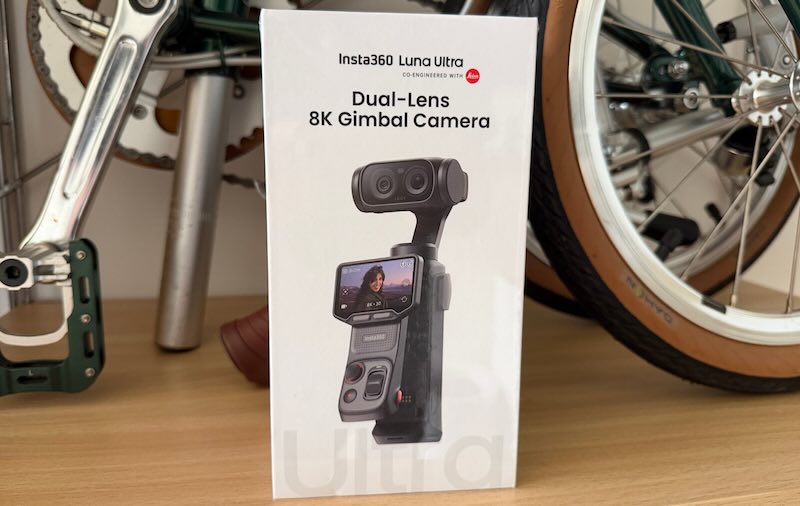
What makes this particularly notable: DJI’s own products face significant U.S. market restrictions, while Insta360 operates without those constraints. That asymmetry adds a layer of commercial urgency to the legal strategy.
Insta360’s response was neither quiet nor slow. The company filed a countersuit against DJI covering five invention patents tied to core gimbal and panoramic camera technologies — including gimbal stabilization algorithms, gimbal pointing control, smooth camera anti-shake, motion data fusion, and panoramic video stabilization.
Beyond the legal filings, Insta360’s CEO took to social media to lay out the development history of the gimbal camera category itself, citing contributions from Feiyu, Zhiyun, Sony, GoPro, and a Korean manufacturer who brought a three-part mini gimbal camera to market before GoPro did. The CEO also noted that Insta360 began developing the ONER modular gimbal camera — a device that allows the gimbal module to be swapped for a panoramic module — six years ago. The subtext was clear: this category didn’t originate with DJI’s Osmo Pocket.
It’s worth noting that Insta360 isn’t new to patent battles. Earlier this year, the U.S. International Trade Commission dismissed all five of GoPro’s utility patent claims against the company. That outcome likely factors into how confidently Insta360 is approaching DJI’s legal challenge now.
This escalation reflects a rivalry that’s accelerated rapidly. DJI commands roughly 62 percent of the global handheld smart camera market. Yet Insta360’s revenue reached $1.42 billion in 2025 — a 76.85 percent year-over-year increase — and the company held 85 to 92 percent of the global panoramic camera segment before DJI entered with the Osmo 360 in mid-2025. After DJI’s entry, Insta360’s share in that segment dropped to 49 percent, with DJI capturing approximately 43 percent.
With Insta360 also launching Antigravity, a new drone brand that directly challenges DJI’s core market, the two companies are no longer competing in parallel lanes. They’re competing on every front simultaneously. The patent litigation, then, isn’t just about protecting IP — it’s about slowing a competitor that’s closing market distance faster than many expected.
Whether judges in Texas ultimately side with DJI or Insta360, one thing’s already clear: in this DJI vs. Insta360 patent dispute, both companies have a vested interest in making sure the other doesn’t get a free pocket into their profits.

