
The pocket camera segment doesn’t forgive hesitation. When a product misses even one of its four critical pillars—stabilization, image quality, usability, or price—consumers notice immediately. So when OPPO’s upcoming gimbal camera project, internally codenamed “Fuyao” (a name suggesting rapid ascent), started surfacing in supply chain reports, the question wasn’t whether the company could build one. It’s whether they can build one worth buying.
A launch later this year looks increasingly likely. And with that timeline firming up, the pressure is real.
OPPO’s gimbal camera project enters a market where computational imaging has become a genuine differentiator. Smartphone OEMs have spent years refining on-device processing, portrait enhancements, and filter stacks—capabilities that could, in theory, translate meaningfully into a pocket camera format.
Tighter ecosystem integration is another plausible advantage. Seamless syncing with Android devices, cloud backup pipelines, and instant editing workflows are areas where a company like OPPO holds structural leverage that DJI simply doesn’t have. Platform cohesion matters—especially for consumers already inside that ecosystem.
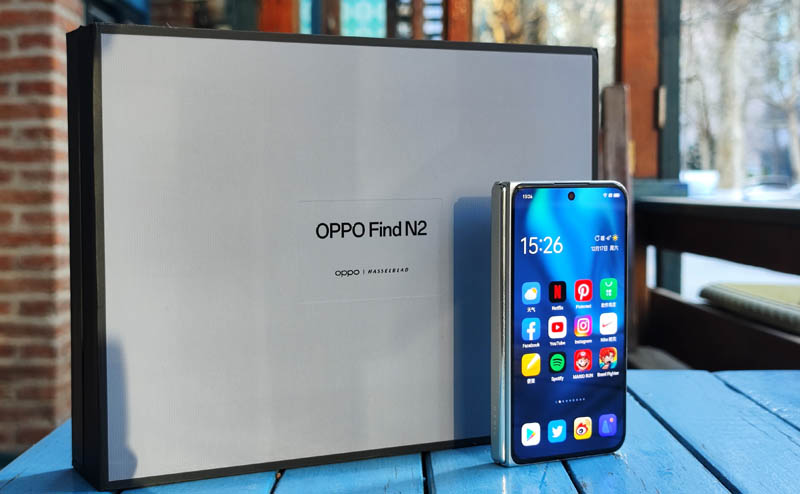
Still, there’s a significant gap when it comes to video. Most Android OEMs, OPPO included, have historically tuned their color science and filter stacks around still photography. Those looks frequently don’t survive the transition to video—particularly when measured against the consistency of Fujifilm’s film simulations or DJI’s own color profiles.
Pocket cameras are also typically used offline. That reality limits the practical upside of cloud-based editing workflows, which sounds like a competitive advantage on paper but rarely plays out that way in the field.
DJI isn’t a niche player. Its production scale and supply chain depth are substantial— Osmo Pocket 3 shipments alone reached multi-million-unit volumes, exceeding the combined output of many smartphones using comparable 1-inch sensors. That kind of scale drives cost efficiency in ways that are genuinely difficult to replicate.
Stabilization hardware is another structural advantage DJI has built over years. Across its gimbal lineup, handheld cameras, and the Pocket series, DJI has set the technical benchmark. Notably, much of the core stabilization IP is protected by third-party patents that have held up through years of legal challenges—meaning competitors can’t simply reverse-engineer their way to parity.
DJI Osmo Pocket 4 currently sits at $499, offering a 1-inch sensor, 4K/240fps recording, and 107GB of built-in storage. That’s a dense value proposition at a price point consumers already understand.
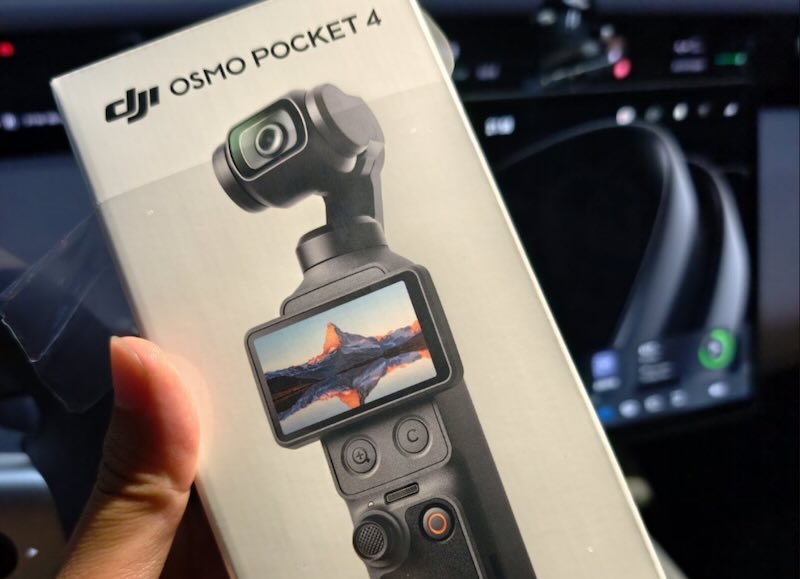
For OPPO’s Fuyao project—or any competitor, for that matter—the path forward is structurally narrow. Differentiation has to be aggressive and legible. Insta360 has pursued multi-camera setups and branding partnerships to carve out a distinct identity. That’s one model.
Other is straightforward: match comparable hardware at a price meaningfully below $400. Without either a clear differentiator or a price advantage, consumer calculus defaults to the Pocket 4, or a discounted Pocket 3.
OPPO’s Fuyao has the name that implies rising fast. Whether the product can back that up is the only question that matters—because in this market, if you’re not ascending, you’re already descending.
Source: Weibo: 数码闲聊站

