
Smartphone cameras have always been a game of trade-offs — compact bodies don’t naturally accommodate the kind of optics serious photographers demand. Yet every year, manufacturers push the boundaries of what’s possible in a device that fits inside a pocket. This time, Huawei’s latest flagship has done something genuinely noteworthy in the periscope telephoto segment: it’s managed to squeeze an entrance pupil that outpaces virtually every competitor on the market. That’s not a trivial achievement, and it’s worth understanding exactly why it matters.
Huawei Pura 90 Pro Max features a telephoto camera with an equivalent focal length of 89mm. Its physical focal length sits at 25.8mm, utilizing the full 1/1.28-inch sensor — representing approximately a 3.45× crop factor. Paired with an F2.6 aperture, result is an entrance pupil of roughly φ9.92mm. In a single-reflection periscope design, that’s the largest we’ve seen, and the engineering required to get there is significant.
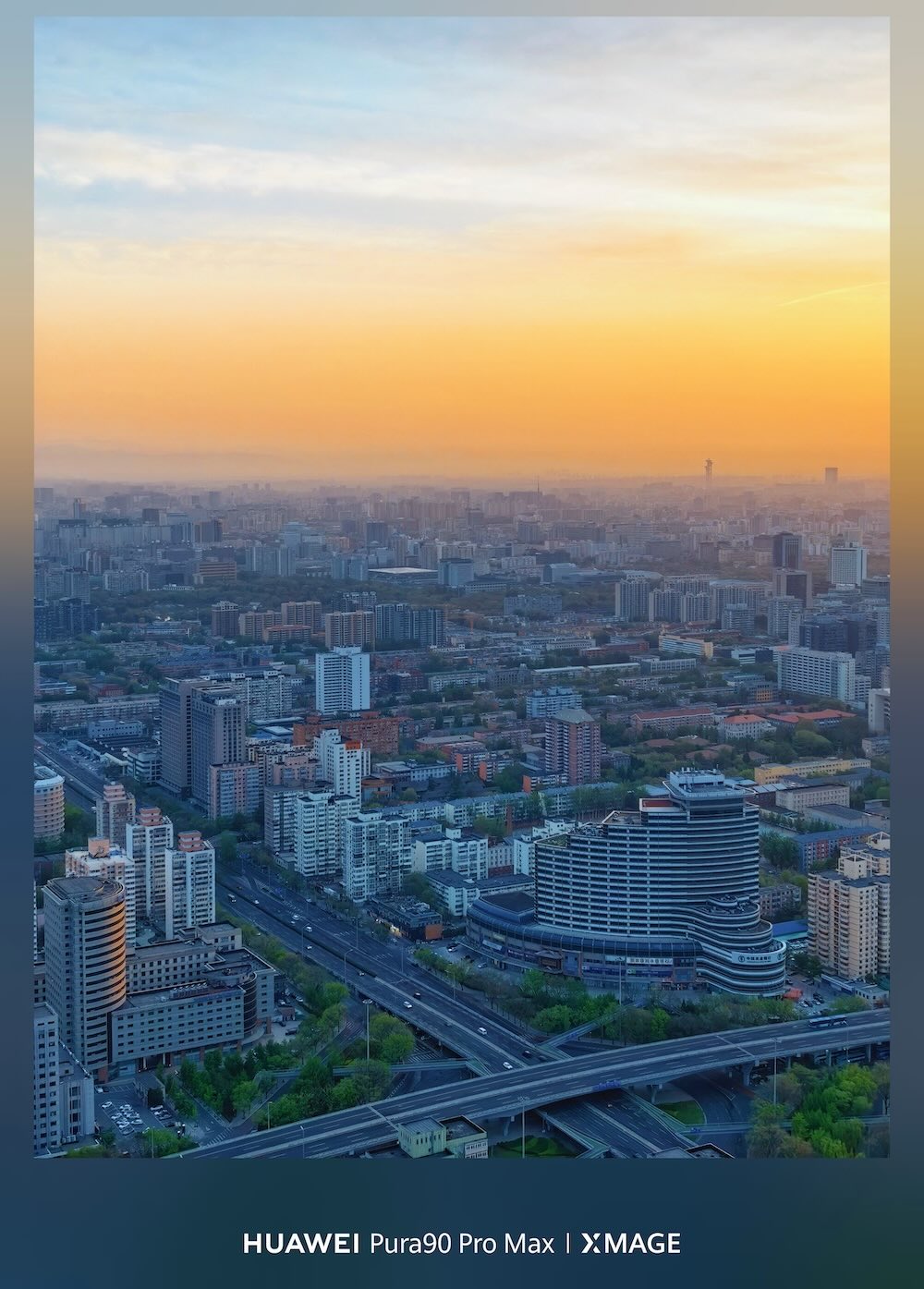
Entrance pupil is a simple calculation: divide the physical focal length by the aperture value. What that number tells you, though, is anything but simple. It’s a direct indicator of a telephoto lens’s real-world capability in low-light situations and at extended distances, kind of metric anyone who’s ever peered through a telescope will immediately recognize.
Here’s a useful way to think about it. Suppose you’re photographing distant birds from the same position with a 400mm F4 lens and an 800mm F8 lens. 400mm has a larger aperture and can maintain lower ISO at equivalent shutter speeds. 800mm delivers tighter framing, so the subject occupies more pixels. But when you normalize the framing — either by downscaling the 800mm image or cropping the 400mm, signal-to-noise ratio ends up being roughly equivalent. Cropping, in effect, reduces the usable sensor area. Physical aperture alone doesn’t tell the complete story.
To put this in competitive context: vivo X200 Ultra’s telephoto comes in at 22.48mm F2.27, yielding an entrance pupil of φ9.90mm. OPPO Find X9 Ultra’s 3× mid-telephoto reaches approximately φ9.6mm. Pura 90 Pro Max, at φ9.92mm, edges ahead — but what’s more compelling isn’t just the number itself. It’s what achieving that number via a single-reflection periscope design implies about the internal engineering.
Compared to traditional cameras, the defining constraint for smartphone telephoto systems is space. Manufacturers want larger sensors, but larger sensors require longer physical focal lengths to achieve equivalent framing. Longer focal lengths demand larger lens assemblies. In conventional upright telephoto designs, the phone’s thickness directly caps the available lens length. 75mm module on Xiaomi 14 Ultra (12.28mm) and the main camera on the vivo X300 ultra (11.56mm) are already operating near that ceiling.
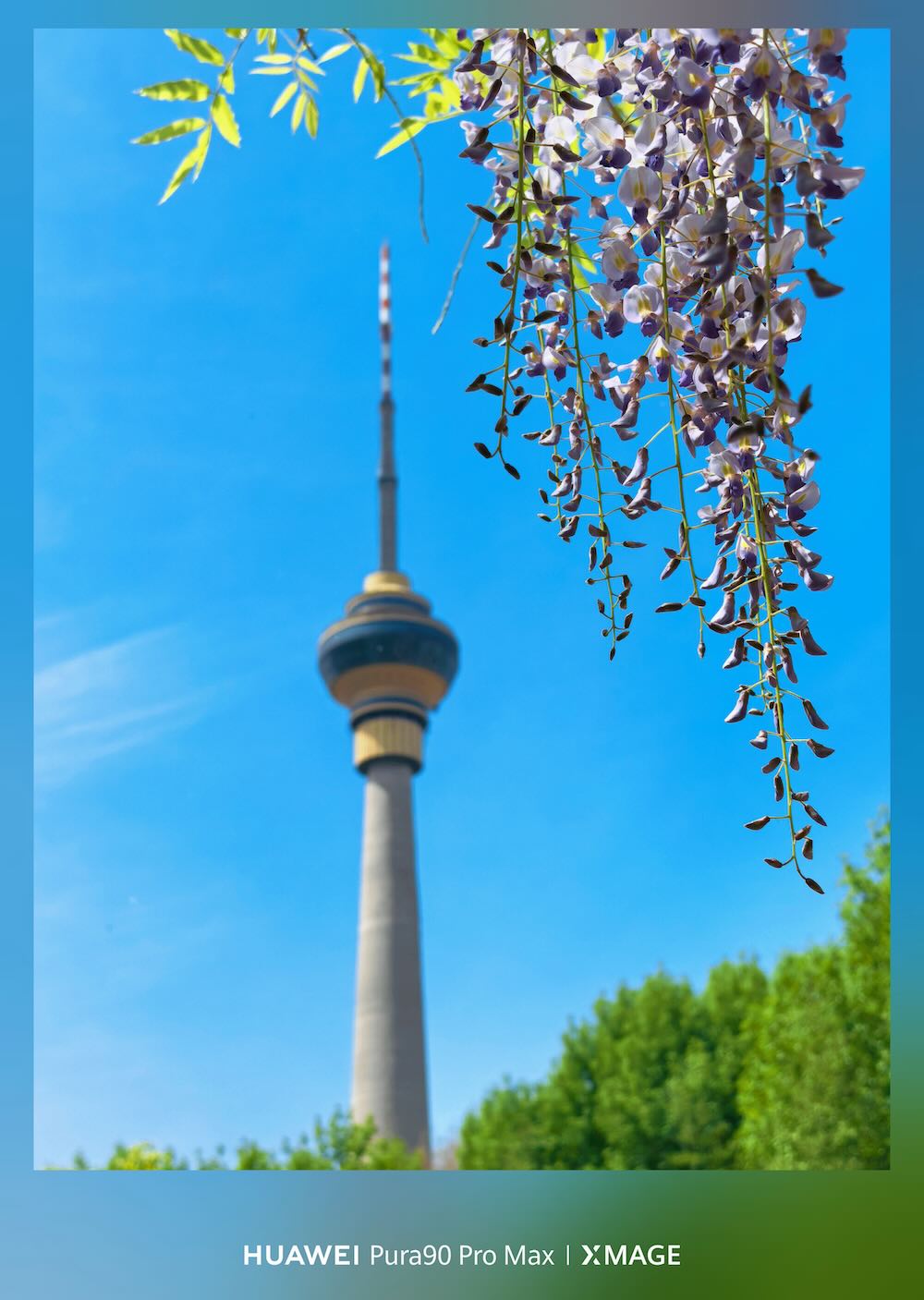
Periscope designs solve part of this by orienting the optics horizontally, drawing on the phone’s internal length rather than its thickness. Allows lens groups exceeding 20mm or even 30mm. It’s not a complete solution, however. Device still needs to accommodate multiple cameras, the SoC, battery, and actuators. Critically, once the sensor is positioned upright, device thickness becomes the limiting dimension for both the sensor module’s short side and the overall lens assembly diameter.
Prisms offer another workaround — they can tilt or reposition the CMOS. But each additional reflection reduces light transmission, lowering effective throughput. With four or five reflections, that loss is substantial and directly impacts achievable shutter speeds. This is the key tradeoff: Huawei Pura 80 Ultra’s telephoto uses a tilted CMOS via prism, while the Find X9 Ultra’s 10× module relies on a five-reflection optical path. In practice, a single-reflection design with a φ9.9mm entrance pupil will outperform a multi-reflection system even if the latter nominally advertises a larger φ10.x mm pupil, because the effective light throughput tells a different story.
It’s fair to be skeptical of certain design choices that have emerged in this segment. Huawei Pura 80 Ultra’s dual optical path design, for instance, reduces the entrance pupil when switching, from φ10.05mm down to φ8.56mm. That’s a meaningful step backward in real-world optical capability. Similarly, continuous optical zoom systems face inherent disadvantages at the telephoto end. Zoom lenses can’t achieve the large apertures and entrance pupils that prime designs can; the best that some current zoom modules offer at the telephoto end is approximately φ8.95mm — and that’s before accounting for field-of-view compromises.
A larger entrance pupil doesn’t automatically guarantee better image quality. Hardware capability and software processing are both essential, and tuning matters enormously in final output. But from a pure optical engineering standpoint, what Huawei has accomplished with Huawei Pura 90 Pro Max represents strong execution: maximizing the entrance pupil within a single-reflection periscope architecture while fully utilizing a large 1/1.28-inch sensor. Efficient internal space utilization at this level is genuinely hard to achieve.
As photographers and consumers, we ultimately want both capable hardware and well-tuned software. Huawei Pura 90 Pro Max delivers convincingly on the hardware side — and in a market where millimeters of glass separate the leaders from the rest, that’s no small Pura feat.

