
Smartphone prices have been climbing steadily, and flagship hardware isn’t cheap. Yet REDMI has consistently found ways to pack serious performance into devices that don’t demand serious money. Redmi K100 is latest evidence of that commitment, a standard-tier phone that somehow lands with a Snapdragon 8 Elite, a dual-chip gaming platform, and a battery so large it can charge your earbuds when you’re done gaming. That’s not a compromise device. That’s a priorities device, and the distinction matters quite a bit.
Redmi K100 isn’t trying to be everything. It’s not chasing the imaging crown, it’s not loaded with periscope zoom lenses, and it’s not competing directly with Samsung’s Ultra lineup or Apple’s Pro Max tier. Instead, it’s built for a specific buyer: someone who games, watches content, and needs their phone to last through a full day, maybe two.
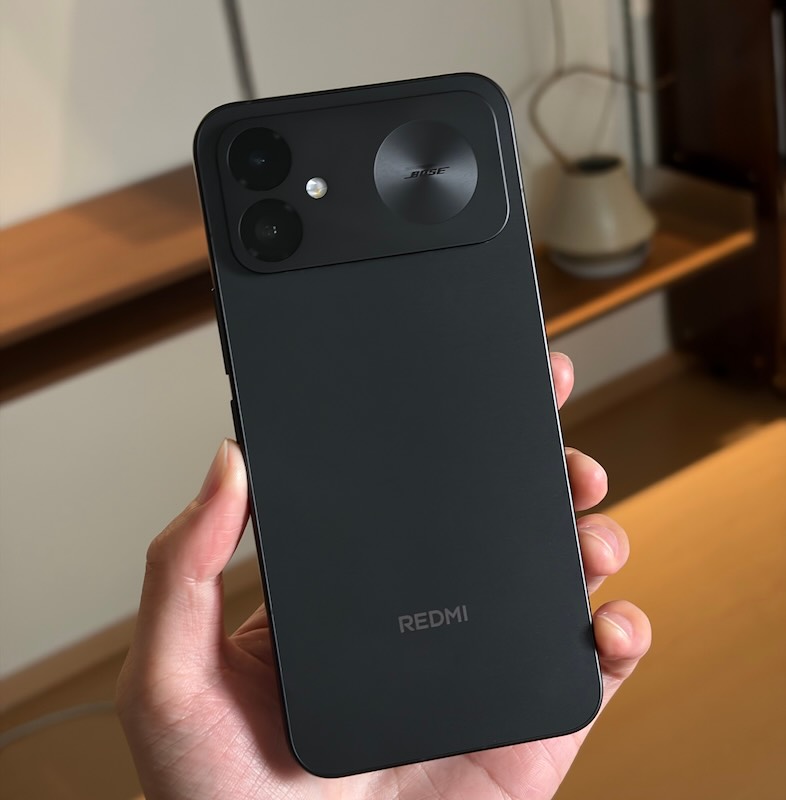
That clarity of purpose shows up immediately in the hardware choices. The Snapdragon 8 Elite handles processing duties, which is already a significant statement for a non-flagship product. Paired with LPDDR5X RAM and UFS 4.1 storage, the internal architecture is fast by any measure currently available on Android.
What makes the Redmi K100 genuinely interesting, though, inclusion of Xiaomi’s D2 AI discrete graphics chip, a component previously reserved for higher-tier Pro Max models. D2 isn’t just a marketing checkbox. It actively offloads graphics processing from the main GPU in supported titles, which translates to lower power consumption at comparable frame rates.
For gaming, that efficiency gain compounds over a long session. Lower power draw means less heat generated, which in turn helps the phone sustain peak performance rather than throttling when thermals spike. 3D cooling system, covering more than 31,000 mm² of combined thermal material area, reinforces this, working alongside the D2 to keep temperatures manageable during extended play.
Combination of the Snapdragon 8 Elite and D2 represents first time Redmi has brought this dual-chip platform to a standard K-series model. That’s a meaningful spec bump, not a minor refresh.
6.83-inch flat-display runs at 165Hz and uses BOE’s M10 luminous material. It supports DC dimming across its entire brightness range and bottoms out at 1 nit — genuinely useful for late-night use without eye strain. 1.5K resolution sits between FHD and QHD, which at this screen size looks sharp in practice.
There’s nothing revolutionary here, but that’s partly the point. Display supports the gaming and content-consumption focus without adding cost through unnecessary resolution or exotic panel technology.
Audio gets handled through a Sound by Bose tuning partnership, and the rear of the device carries a BOSE logo on a decorative plate. It’s a cosmetic differentiation from K100 Pro Max, which features a dedicated bass speaker in that location. Standard K100 retains the sonic tuning, though, which means the stereo output is still calibrated for the kind of punchy audio that benefits action games and streaming video. 0815 X-axis linear motor rounds out the tactile feedback experience.
Camera array, a 50MP main sensor, an 8MP ultra-wide, and a 20MP front camera, is competent rather than ambitious. Xiaomi’s Light Hunter 800 sensor on the primary camera should handle daylight shooting and video calls reliably, but this isn’t the phone to reach for if computational photography is a priority.
That’s a conscious trade-off. Every millimeter of internal space and every dollar of bill of materials that didn’t go toward a larger sensor stack or telephoto module went toward battery capacity, cooling infrastructure, or the D2 chip. For the intended audience, that’s the right call. For someone who shoots a lot of photos in varied lighting conditions, there are better-equipped options at similar or higher price points.
It’s hard to write about K100 without circling back to the battery. 10,000mAh is, by a significant margin, the largest capacity Redmi has shipped in a K-series device. It uses a silicon-carbon chemistry with a high silicon-content ratio, enabling greater energy density without proportional increases in physical size.
In practical terms, two days of moderate use is realistic. Heavy gaming will eat through capacity faster, but even pushing the hardware hard, battery should comfortably outlast a full day. 100W wired charging brings it back from empty reasonably quickly, and the 27W reverse charging feature lets the phone act as a power bank, useful for topping off earbuds, a smartwatch, or a friend’s dying handset.
For mobile gamers specifically, the combination of battery capacity and the D2 chip’s efficiency improvements creates a meaningful real-world advantage: longer sessions, less heat, and fewer interruptions to plug in.
Whether this phone becomes a genuine value proposition depends entirely on the retail price Xiaomi has now set at launch, 12GB/256GB model is priced at RMB 3,500. K100 series is available now at NextBuying.

