
Xiaomi has issued an official statement addressing online speculation about the zoom ring functionality on its 17 Ultra Leica Edition. Controversy emerged after critics analyzed teardown videos and suggested the physical control mechanism was merely a software feature. Xiaomi took to Weibo to set the record straight, explaining the engineering decisions behind the component and its actual mechanical implementation.
What sparked the zoom ring debate? dispute originated from comparisons between Xiaomi’s official cutaway illustration and teardown images posted by Yang Changshun. Critics noted that gears weren’t visible in the teardown photos, leading to claims that the zoom ring lacked genuine mechanical components. However, this comparison fundamentally misrepresented the evidence. Official cutaway shows a perspective view from the exterior inward, while the teardown images capture an entirely different cross-section. These two visual references don’t align for direct comparison.
How the Xiaomi 17 Ultra Leica Edition zoom ring actually works
Mechanism relies on an optical displacement sensor paired with a gear system to convert physical rotation into zoom adjustments. Hardware-based approach ensures that user input translates directly into camera control. Beyond zooming capabilities, ring supports multiple functions, users can configure it to modify exposure value, cycle through filters, or serve as a rapid camera activation shortcut. Versatility reinforces the device’s positioning as a camera-centric flagship rather than a standard smartphone.
Implementation represents Xiaomi’s attempt to bridge tactile interaction with digital photography. While the first iteration shows room for improvement, the presence of mechanical elements remains undeniable. Optical sensor tracks movement while the gears provide physical feedback, creating an experience that extends beyond purely touch-based controls.
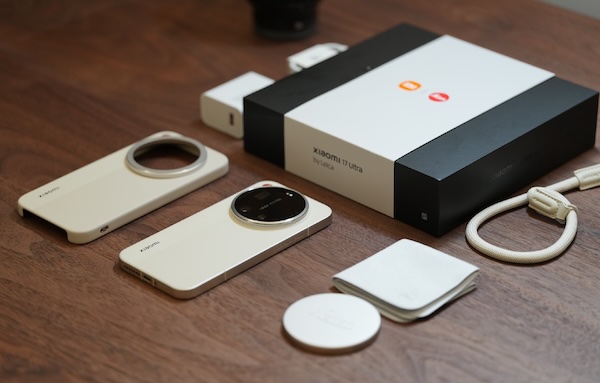
Electronic zoom rings have become standard in the camera industry, and aperture controls often function entirely through electronic signals. Many Nikon and Fujifilm lenses feature aperture rings that produce no mechanical effect unless mounted on a compatible camera body. Designs aren’t considered illegitimate simply because they rely on electronic interpretation of physical input. Same principle applies to the Xiaomi 17 Ultra Leica Edition implementation.
Professional photographers regularly use lenses where physical controls communicate electronically with the camera body. Allows for precise digital adjustments while maintaining the familiar tactile experience that photographers expect. Xiaomi’s design philosophy follows this established pattern rather than inventing something unprecedented.
Xiaomi’s statement specifically addressed concerns about slight movement in the zoom ring. Confirmed that engineers intentionally designed the component with minimal radial and axial play. Tolerance serves a protective function, it prevents deformation from impact damage and reduces the risk of dust or liquid ingress causing the mechanism to jam. Users may notice a tiny wobble or faint sound during operation, but these characteristics reflect deliberate engineering choices rather than manufacturing defects.
Explanation highlights how consumer electronics must balance precision with durability. A completely rigid design might offer tighter tolerances initially but could fail more readily under real-world conditions. Slight play allows the mechanism to absorb shocks and maintain functionality across varied environmental conditions.
Extended use of the Xiaomi 17 Ultra Leica Edition reveals that the zoom ring delivers tangible value during actual photography sessions. Tactile feedback provides a more deliberate shooting experience compared to purely digital controls. While refinements could enhance future versions, the current implementation succeeds in differentiating the Leica Edition from standard smartphone cameras.
The device represents Xiaomi’s most ambitious camera-focused flagship in recent years. Whether the zoom ring controversy has legs or not, users who prioritize photography capabilities will find substantial improvements throughout the camera system. Ring adds experiential depth without compromising core functionality, though it ultimately remains an enhancement rather than a fundamental requirement for quality images.
Critics who dismiss the feature as “fake” miss the broader context of how modern camera controls function. Xiaomi 17 Ultra Leica Edition zoom ring operates within established industry standards while adapting those principles for smartphone form factors. Adaptation inevitably requires compromise, but it doesn’t negate the mechanical reality behind the ultra claims.

